
A private label is more than a logo on a bag
A cat litter brand is built on repeat purchase. Packaging may win the first order, but performance decides whether the customer buys again. That is why we treat private label manufacturing as a product-development project rather than a simple printing job. The market is large enough to reward brands that get the basics right. The American Pet Products Association reported that 53 million U.S. households owned a cat in 2025, while total U.S. pet-industry expenditure reached USD 158 billion. In Europe, FEDIAF’s 2026 statistics report 140 million pet-owning households and 306 million pets based on 2024 data. Those numbers do not measure cat litter alone, but they show the scale of the consumer base that pet-care brands are serving.
Start with the user scenario, then define the formula
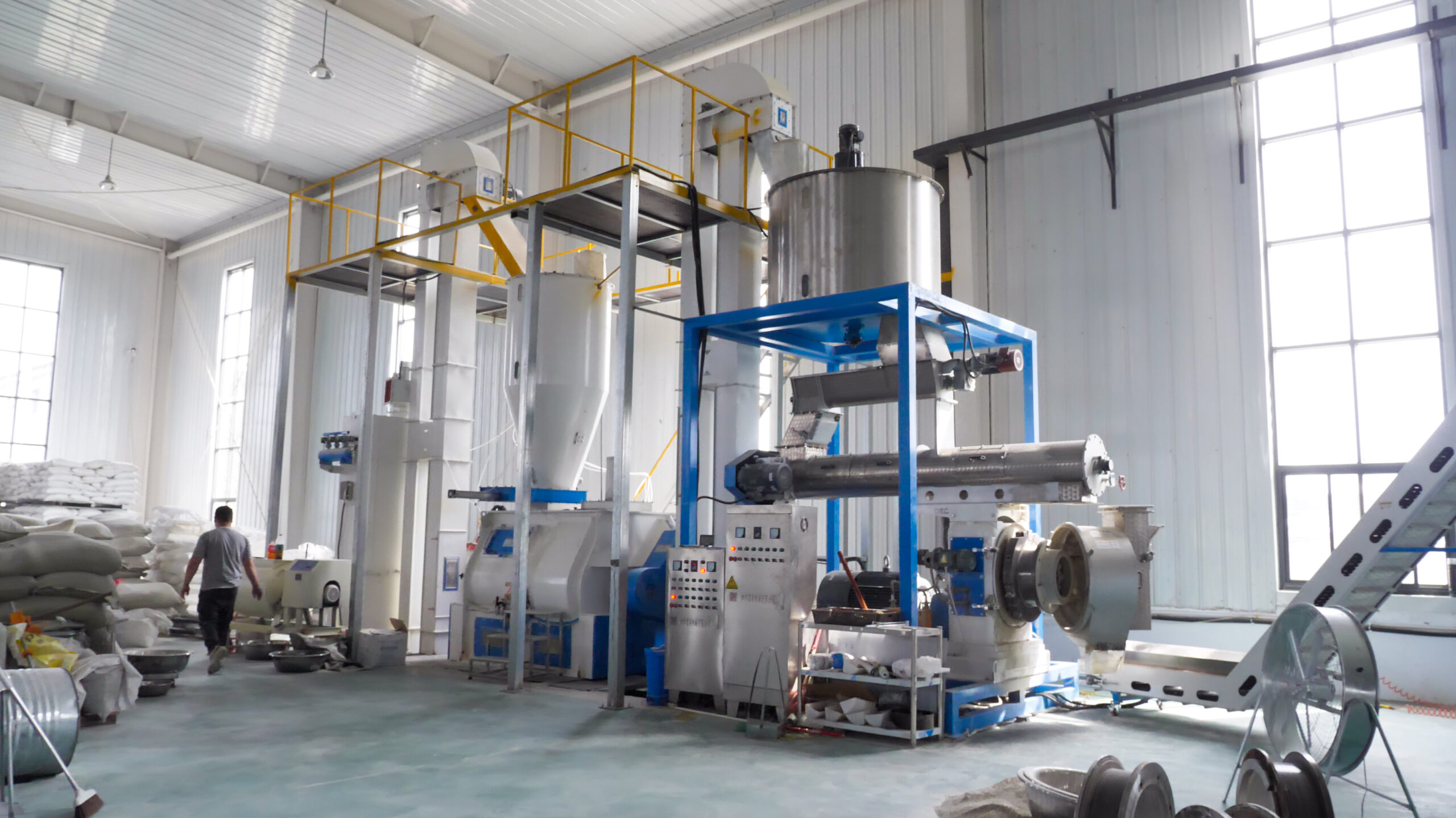
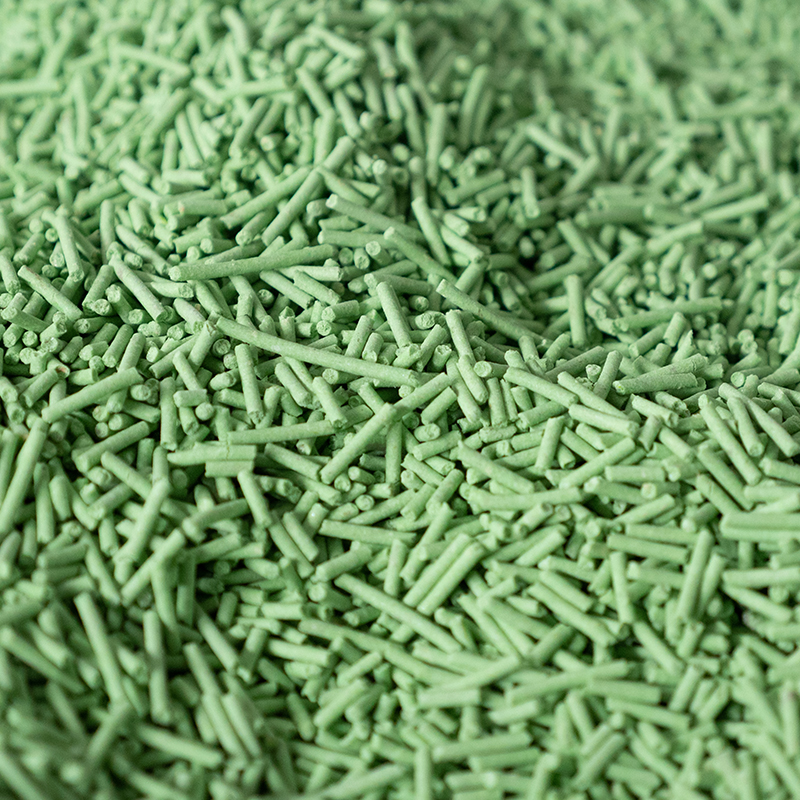
The first question we ask is not which bag size you want. It is how the litter will be used. A product for an automatic litter box needs different particle control from a conventional bentonite product. A premium tofu litter may prioritize fast liquid uptake, low tracking and flushability, while a mineral litter may focus on compact clumps, odor control and cost efficiency. We commonly work with tofu litter in 1.5 mm, 2.0 mm and 3.0 mm particle sizes, spherical bentonite around 1-3.5 mm, and mixed formulas designed around a specific performance target. One practical mixed-litter specification we use is 70% tofu litter, 20% bentonite and 10% deodorizing granules, with clump formation targeted at approximately 3-6 seconds and finished-product moisture below 8%. These numbers are not marketing decoration; they are production parameters that can be written into an agreed specification and checked batch by batch.
Quality control needs measurable limits
For private label customers, consistency is usually more important than a single impressive laboratory result. A good specification therefore defines the test method as well as the target. For bentonite programs, for example, we can work with a low-dust specification of about 99.8%, water absorption around 300% and moisture below 5%, subject to the agreed test procedure and raw-material grade. We also check particle-size distribution, bulk density, clump strength, clumping time, fragrance uniformity, bag weight and seal condition. When a customer compares samples from several factories, the most useful question is not simply ‘Which sample clumps fastest?’ It is ‘Can the factory reproduce the same result after ten containers?’ Our production records are organized around raw-material lots, formula versions, production batches and finished-goods inspection so that deviations can be traced instead of guessed.
Packaging is part of product engineering
Cat litter is dense, abrasive and difficult for weak packaging. A private label bag has to survive filling, stacking, inland transport, container loading, warehousing and final-mile handling. Depending on the product, we use laminated structures such as BOPA/PE or PA/PE and adjust film thickness, gusset dimensions, handles, vacuum level and carton configuration around the target weight. Common retail formats include 6 L tofu litter, 2.5 kg mixed litter, and 4 kg or 8 kg bentonite. A typical 6 L tofu format can use a back-seal gusset bag around 430 x 200 + 70 mm, but the final structure should be confirmed against the actual product density and filling line. Seal quality should be treated as a measurable engineering item. ASTM F88/F88M-23, for example, is an active standard method for measuring the seal strength of flexible barrier materials and explains why seal strength is relevant to process validation and package integrity.
MOQ and lead time should match the launch stage
A new brand should not be forced into an oversized first order simply to make a factory schedule convenient. For many standard private-label projects, our customized printed-bag MOQ starts at 5,000 bags per design, with packaging and production typically requiring around 15-20 days after artwork, formula and materials are confirmed. When a customer needs to test the market first, an existing-bag program can reduce development time; for standard products of no more than about five tonnes, production can in some cases be arranged within seven working days. The exact schedule depends on material availability, fragrance, printing, inspection requirements and shipment planning. We prefer to state these dependencies before an order is placed rather than explain a delay afterward.
Manufacturing location matters, but supply-chain depth matters more
China’s cat litter supply chain is not built around a single factory. It includes raw-material mining, screening, drying, granulation, packaging film, carton production, printing and export logistics. Xinhua reported that Ningcheng County in Inner Mongolia produces about 1.5 million tonnes of bentonite cat litter annually, exports to more than 100 countries and works with more than 1,400 brands. This type of industrial cluster matters because a private-label project often needs more than one capability at the same time: stable mineral supply, packaging conversion, quality testing and container-scale export execution. A factory can look impressive on a video call; the real question is whether the surrounding supply chain can support repeat orders without changing the product.
Build compliance into the packaging before printing
For brands selling into the European Union, packaging decisions now need to consider Regulation (EU) 2025/40 on packaging and packaging waste. The regulation applies from 12 August 2026, although individual obligations phase in on different dates. This is a practical reason to avoid designing packaging only around appearance. Material composition, recyclability, labeling space and technical documentation should be considered while the artwork is still editable. The same principle applies to product claims. If a brand intends to add antibacterial, antimicrobial or other biocidal positioning, the formula and claim need regulatory review before the claim is printed. Compliance should be a gate in the development process, not a correction after thousands of bags have already been produced.
What we want a private-label customer to receive
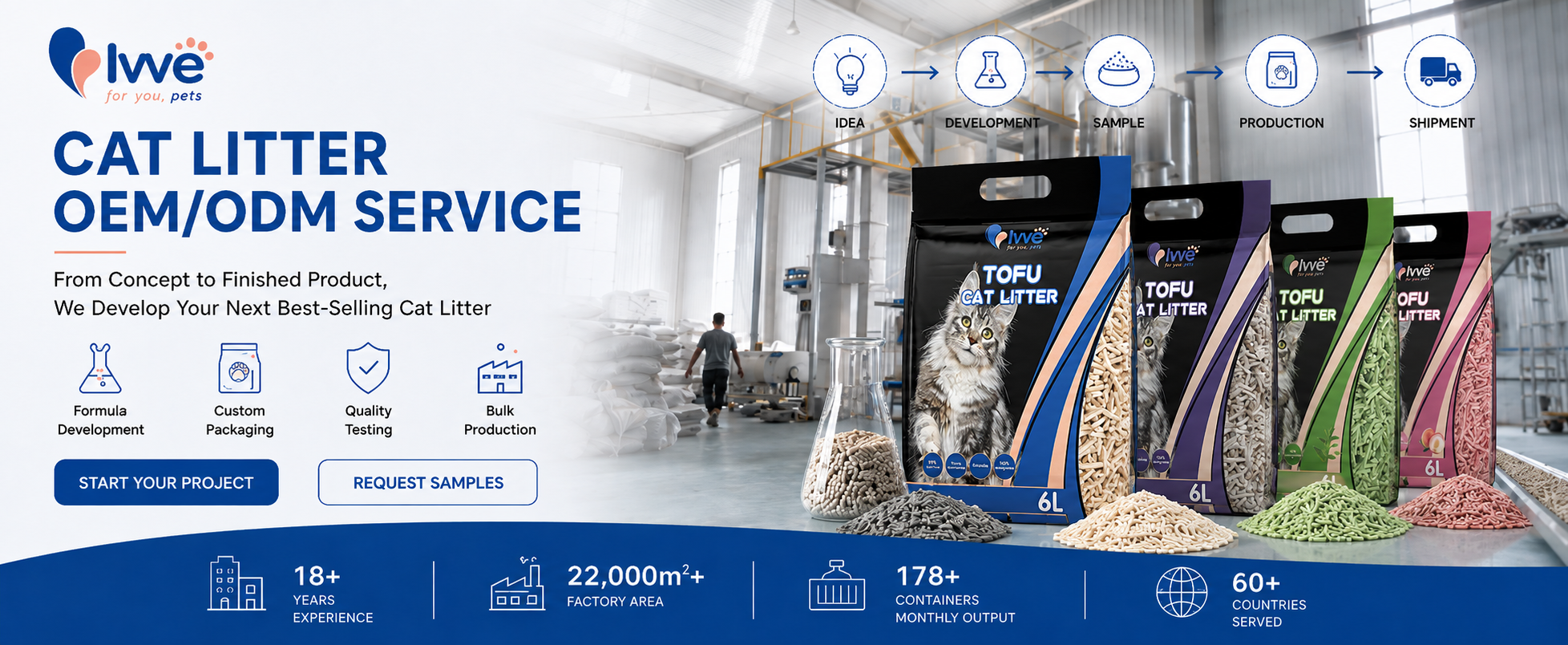
After seven years working with cat litter manufacturing and export, our view is simple: the customer should leave the development process with a repeatable product, not just a sample that looked good once. That means a defined formula, measurable technical limits, approved packaging, documented inspection points and a production route that can scale from the first trial order to regular container shipments. We can support tofu, bentonite, mixed and other cat litter programs, but the material is only one part of the project. The real value of a private label manufacturing partner is the ability to turn your positioning into a specification, turn the specification into stable production, and keep the same product in the market long enough for your brand to earn repeat customers.
